


Discover one of the most peaceful and enchanting spots in Buenos Aires: the Japanese Garden. This hidden gem invites you to immerse yourself in the tranquillity and elegance of Japanese culture, surrounded by lush greenery, koi ponds, and traditional bridges. Whether you’re looking to relax, take stunning photos, or explore authentic Japanese architecture, this serene retreat offers a unique experience in the heart of the city. A must-visit destination for nature lovers and cultural enthusiasts alike.
The Japanese Garden of the City of Buenos Aires is nestled in the Palermo neighbourhood, not too far from Parque Tres de Febrero (better known as the Bosques de Palermo) and other parks that make up a huge green lung in the city.
This natural space offers a walk through Japanese culture and a moment of meditation, inviting visitors to immerse themselves in traditional Japanese architecture and carefully planned landscapes.
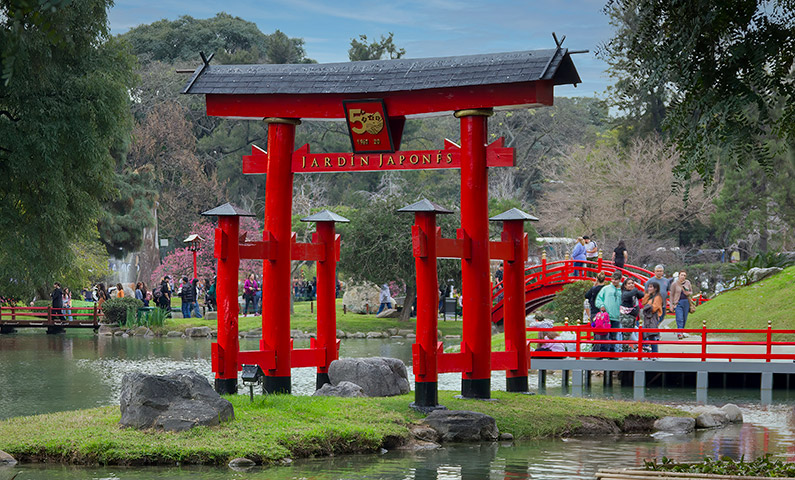
Japanese Garden of Buenos Aires. Photo: © @alieniger
In addition to being a space to experience natural beauty and serenity, in the Japanese Garden, you will have the chance to participate in many traditional learning activities.
Discover more about the garden’s history and all the opportunities this peaceful oasis has to offer.
Origin and History
In the mid-60s, the Argentine-Japanese community transformed part of Tres de Febrero Park into what we know today as the Japanese Garden. The aim was to honour the Japanese princes, the current emperor Akihito and his wife Michiko on their visit to Buenos Aires, with a typical Japanese-style garden outside their country.
Inaugurated on May 17, 1967, the space was later donated by the Embassy of Japan, to the Municipality of Buenos Aires. This was a way of thanking the Argentine people for welcoming the Japanese community during times of immigration.
The idea of creating an attractive long-lasting meeting area for the Japanese and the heir princes to the imperial throne, Michiko and Akihito, was what encouraged the fundraising to build the garden in just 50 days, not without great effort and dedication. That event was of enormous importance since for the first time a member of the imperial family visited the country.
Planned by the renowned landscape designer Yasuo Inomata, a decade later, in 1977, The Japanese Garden was redesigned, following the idea of a Zen Garden as a model.
Later on, during the middle -80s, city authorities decided to recover and expand the garden, creating a cultural space for courses and workshops. In 1989, the Japanese Garden was established as a foundation to give a legal framework to the activities. At present about 100 people work there. Part of the staff is devoted to tasks of gardening and maintenance of the property.
Since 2004, the Japanese Garden has been considered a “site of tourist interest” by the Ministry of Tourism of the City of Buenos Aires; the National Executive Branch declared it “an asset of historical and artistic interest of the Nation.”
The Japanese Garden does not receive funds from any state administration; It depends exclusively on the income generated from ticket sales, the crafts, the courses and workshops plus the gains obtained by the Japanese food restaurant.
Garden Features
The Garden features a typical Japanese park. Lakes, bridges and waterfalls along with a large collection of plants and trees, evidencing the detailed landscaping work, make it a unique Japanese-style garden in the heart of Buenos Aires.
Although Japanese gardens mostly do not contain flowers, rose bushes and azaleas were incorporated into the Buenos Aires gardens adding some native species to the original vegetation composed mostly of eucalyptus, plane trees and tipas. Among the Japanese flora, we can appreciate short and black pines, plum trees, and its national flower: the cherry tree (sakura). You’ll find different types of Sakura trees not only from the island of Okinawa but also from the continent. Its stunning flowers range from pink to almost white and appear in spring, providing a spectacle similar to a snowfall.
The blossoming of the cherry tree is so important among the Japanese that the organisation of the Garden is in charge of notifying about the event on social networks, as a way of inviting the people of Buenos Aires to witness this wonderful vision on the Sakura path.
In addition to the beauty of the cherry blossoms, this Zen garden is designed as a strolling peaceful space decorated with bonsais, azaleas, kokedamas and orchids lined by cement lanterns. The detailed landscaping follows the standards of Japanese architecture and includes elements of mythology, symbolism and Japanese divinities
From statues evoking protective spirits, to its ponds full of koi fish, the space invites you to an immersive trip within Japanese culture.
The Garden also has a Chashitsu or tea house, a space built especially to carry out the ancient Japanese tea ceremony. Ornamented with typical elements, all the interior garments were imported from Japan, some of them being a hundred years antique. The exquisite interior represents a traditional pagoda.
Things You Can’t Miss During Your Visit
The Pond and its Inhabitants
A large number of Koi fish and carp live in the central lake, contributing with their colourful bodies to the scenery that the Japanese Garden offers. The first specimens were brought from Japan in 1967 for opening. You can feed them by purchasing special food bags inside the Garden.
The selection of Koi fish is not coincidental, since they are considered strong species due to the fact they swim against the current to lay their eggs. Let’s learn about a popular Japanese legend:
“In the Yellow River, the fish that could swim upstream and reach the Dragon gate would be transformed into a Dragon. Several fish tried, but only the Koi fish succeeded in that mission.”
Thanks to this legend, the carp or Koi fish is a symbol of strength and courage, and it is very common in Japan to wish that children were as strong as this attractive being.
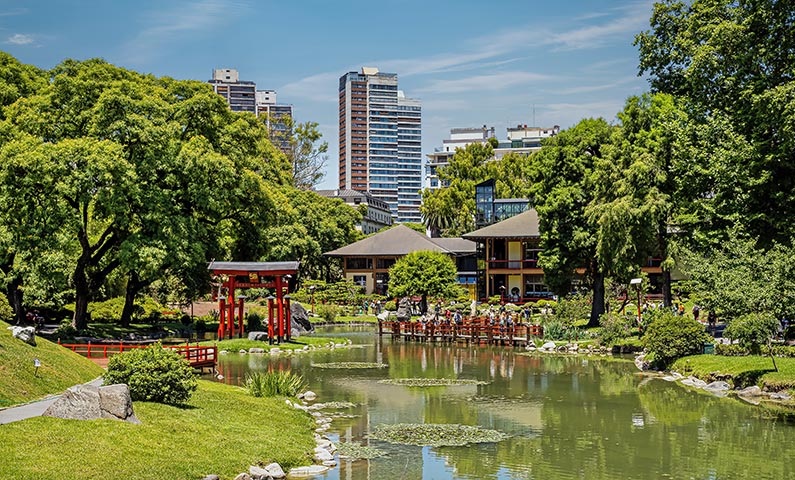
View of the Japanese Garden Pond. Photo: shutterstock.com
The Meaning of Red Bridges
The bridges that cross the lake are another of the distinctive elements of the Japanese Garden. From here we can observe the Koi fish and feed them as well.
These typical bridges not only facilitate crossing over the lakes in both directions, but they also symbolise passing from one world to another. Each one of them has its meaning: God’s bridge, with a curved shape and red colour, represents the path to paradise and the union of the two worlds, the human and the divine; The Decision Bridge or Zig Zag Bridge symbolises moving from one state of consciousness to another; and finally, the Truncated Bridge, which leads to the island of miraculous remedies,
The latter connects with another part of the Japanese Garden, also called Island of the Gods, which is located right in the centre of the park and allows us to have a view of the whole place.
Craftsman’s House
If you are looking forward to connecting with Japanese culture, the Aomori Ken House of Artisans is a must-visit. Located a few metres from the park’s main entrance, you will find different exclusive products in the Garden, such as crafts based on Japanese origami techniques. You can also find typical Japanese crafts: maneki neko, daruma, omamori, kokeshi, burn, and hachimaki, among others.
Salon Tokyo
This space is devoted to exhibiting and transmitting Japanese art. Through each one of the works, you will be able to discover and sense perseverance, harmony, high quality of life, discipline and continuity. The viewing balcony allows you to enjoy the careful landscaping and tranquillity so characteristic of the Japanese Garden. At the Cultural Center, there are a large number of activities that bring us closer to the traditions of Japanese people, such as origami, literature, dance, recreational gymnastics and judo, painting, manga and anime festivals.
Inside the Garden, there is a library with Japanese Literature. They also offer courses on Japanese cooking and culture.
Activities
The minimalist design is shown in every detail of the Zen traditional landscaping. Everything in the Japanese Garden reflects the key concepts of Japanese cultural heritage, making it a perfect environment for meditation and mindfulness. Not only for the cultivation of bonsai, which implies concentration on the task but for the simple fact of being immersed in the serenity, silence and visual harmony of this space.
The most important symbols you’ll discover in the Japanese Garden are the bamboo cane, which represents the righteousness of the soul, and the statues of lions, which are protectors and guardians of homes, which is why they are placed in the arches.
You will notice that these statues are in pairs, always being one of them with their mouths open. You will also find a Buddhist tower with 13 eaves, representing the stages that human beings must go through to achieve eternal life.
Important Information
The Japanese Garden opens its doors daily from 10:00 a.m. to 6:45 p.m., even on Saturdays, Sundays and holidays.
Admission includes a subscription that collaborates with the maintenance and care of the Japanese Garden. Once a week when entry is free for Argentine residents who present their ID.
To allow visitors to learn more about Japanese history and culture, guided tours are offered on Saturdays, Sundays and holidays at 11:00 a.m.
The Japanese Garden restaurant offers a wide range of the best Japanese culinary art. Although the preference is usually for sushi, which is prepared in front of diners, the menu has other dishes from typical Japanese cuisine. Making a reservation is always recommended. Remember that picnics are not allowed inside the Japanese Garden.
Due to it being managed by the Argentine-Japanese Cultural Foundation, the celebration of traditional Japanese festivals is usually held at the garden so you may take part in typical Japanese festivals during your visit.
With its wonderful settings and the serene energy it provides, the Japanese Garden is a corner of Buenos Aires to fall in love with. This unmissable walk in the city is the perfect balance of natural beauty and serenity.
Av. Casares 3450, Palermo
Find the Japanese Garden in Buenos Aires
You might also enjoy these guide

Puerto de Frutos in Buenos Aires
Puerto de Frutos is the perfect destination for a delightful day outdoors with family or friends and is a must-visit when you find yourself in Tigre. Recognised as the most significant open-air shopping centre in Latin America, it will enchant you with its crafts and...

Mataderos Fair: Argentine Culture and Tradition in One Place
The Fair of Argentine Popular Crafts and Traditions, known by locals as La Feria de Mataderos due to its location, is an amazing display of Argentine products and culture. [pac_divi_table_of_contents default_state="closed"...

Countryside Day Trip in Buenos Aires
If you are tired of the fast-paced movement of the city and need a little fresh air, we will take you on a tour of the best spots in Buenos Aires. With outdoor activities and a total connection with nature, here you have the perfect plan for a...

Plaza de Mayo and its Surroundings
The Plaza de Mayo is a symbolic and must-visit place in the city. It allows us to learn a lot about the history and identity of Argentina itself. Historically, this place has been chosen by everyone as a meeting point for national celebrations and important dates as...